Alert level raised on Kelut volcano (East Java, Indonesia)
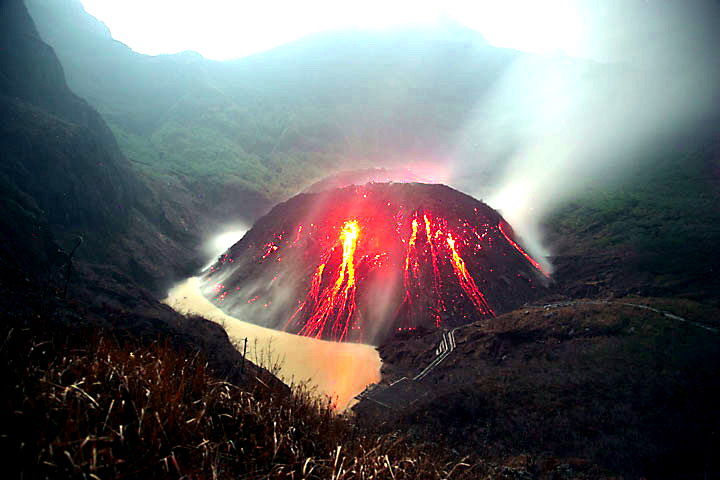
The
alert level of the volcano was raised today from 1 ("normal") to 2
("Waspada", "watch") on a scale of 1-4. During the second half of 2014, a
strong increase in seismic activity and a 5.5 deg temperature increase
of the crater lake water had been detected.
The number of shallow volcanic earthquakes rose from averages of 1-2 per day to approx 10 per day during 20-31 Jan and climbed to more than 100 events since the start of February alone.
The number of shallow volcanic earthquakes rose from averages of 1-2 per day to approx 10 per day during 20-31 Jan and climbed to more than 100 events since the start of February alone.
Villagers run for their lives as Sinabung volcano kills 16 in Indonesia

February 1, 2014 – MOUNT SINABUNG, Indonesia — A rumbling volcano in western Indonesia on Saturday unleashed fresh clouds of searing gas that killed at least 16 people and injured three, only a day after villagers who fled earlier eruptions returned home thinking it was safe, officials said. The dead included four high school students on a school trip to see the volcano and a local journalist, said National Disaster Mitigation Agency spokesman Sutopo Purwo Nugroho. He said that the government on Friday allowed nearly 14,000 people living outside a three-mile danger zone to return home after the volcano’s activity decreased. Mount Sinabung’s morning eruption was followed by a more powerful blast that sent lava and pyroclastic flows down southern slopes up to 2.8 miles away, Nugroho said. Television footage showed villages, farms and trees around the 8,530-foot -high volcano covered in thick gray ash. Authorities were still preventing more than 16,000 villagers living along the path of hot clouds from going back to their homes, but many of them insisted on checking their houses and farms after more than four months of being crammed into temporary shelters. Authorities raised the alert status for Sinabung to the highest level in November. “The death toll is likely to rise as many people are reported still missing and the darkness hampered our rescue efforts,” said Lt. Col. Asep Sukarna, who led the rescue operation.
The number of evacuees rose to more than 30,000. Many wore masks to protect against the soot and sulfur-choked air....... Read Article @ NY Post
New eruptive phase reported at Ecuador’s Tungurahua Volcano

January 31, 2014 – ECUADOR – A new eruptive phase has begun at the volcano. Since the early morning today, the seismic network detected an increase in earthquakes including signals of small explosions and long-period events and tremor typical for internal fluid movements (gasses and magma). The Tungurahua volcano Observatory while unable to make direct visual observations received reports from observers that fine black ash fell in Pungal and Penipe, and minor amounts in Palictahua. The black color of the ash suggests that it originates from fresh (so called juvenile) magma. The last eruptive phase of Tungurahua was between 6 Oct and 13 Nov past year and consisted in strombolian-vulcanian explosions generating ash columns rising up to 4 km, accompanied by strong shock waves and producing occasional pyroclastic flows. Bursts of moderate to strong intensity tremor characterized seismic activity during that period. Since 13 Nov, activity had decreased markedly and the volcano only showed weak degassing and no signs that could have been interpreted as precursors to the current new activity, IGPEN mentions in its latest bulletin. This implies that the magma that started the current new phase of activity has risen very quickly from a deeper reservoir into the shallow plumbing system of the volcano. In other words, eruptions at Tungurahua can start with little or even no warning. –Volcano Discovery
Kavachi undersea volcano (Solomon Islands) erupts

February 1, 2014 – SOLOMON ISLANDS – A submarine eruption is likely occurring at the submerged volcano. A NASA satellite image from 29 Jan shows a plume of discolored sea water swirling and drifting from the location of the volcano. The discoloration is likely from suspended volcanic sediments (the fragmented lava) and gasses. Kavachi is an undersea volcano on the southern edge of the Solomon Islands in the western Pacific Ocean. It erupted dozens of times in the 20th century, often breaking the water surface, only to be eroded back below the water line within a few months. Whether the new eruption will break the surface and create another new island remains to be seen. Directly above the undersea peak, a bright patch is visible that suggests vigorously churning water—but there is no sign that the eruption has broken the surface. (NASA) –Volcano Discovery
** UPDATES**
No comments:
Post a Comment
Thanks, Your Comment will appear within the next 24 hours...
Your comment is very much appreciated and helpful to our readership.
.... Morpheus